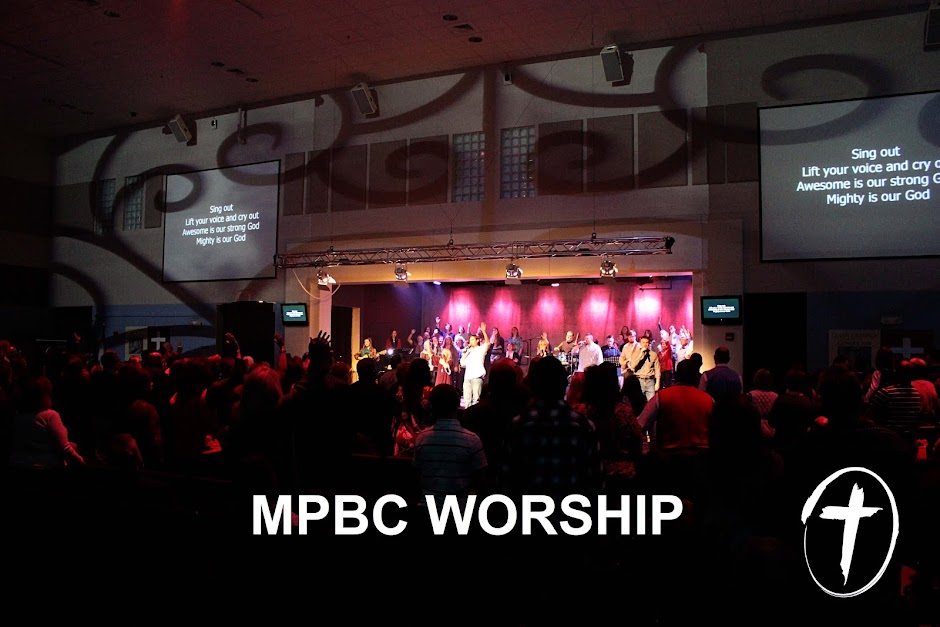
Since a new wave of worship music has come along in the last several years, there has been a bad word to develop among the Christian community in regards to the styles of music being done in churches across the country. That bad word is “concert”. That seems to be a word never to be uttered among churches when talking about their times of worship on Sunday mornings.
Since the “new vs. old” and “traditional vs. contemporary” argument began, some people that cling to the side of traditional hymns have called the music of “modern” churches a “concert”. Obviously a concert can’t bring any glory or even offerings to the Lord, right? Well….maybe I look at it a bit differently.
First of all, don’t get me wrong. I love hymns. I didn’t exactly grow up around them so forgive me if I don’t know all 6 (or however many) verses to “Amazing Grace”, but I really do enjoy the song! There are lots of hymns that I enjoy that have very sound doctrine. In fact, our church makes it a point to do several songs that throw in a hymn in part of the song, so I don’t think hymns are to be forgotten at all. Those songs just connect well. Here’s the thing though…at one time, hymns were considered “modern” and were widely unaccepted in churches. Imagine that! Sound like any modern styles of worship music today? But that debate isn’t why I’m writing.
Back to my thought on “concert”, where does your mind go when you hear that word? Can you actually have a worship concert and still be holy? Can you perform and still glorify Jesus?
Let’s look at the definition of concert:
1. A public musical performance in which a number of singers or instrumentals, or both, participate.
2. A public performance, usually by an individual singer or instrumentalist.
3. Agreement of two or more individuals on a design or plan.
So, as you can see, there’s nothing inherently wrong with the word “concert”. We’ve somehow twisted it’s meaning to where “concert” means bringing attention to one’s self. Sure, if we look at secular music and artists, it’s easy to say their “concerts” bring attention to them and they celebrate their record or the purpose of their tour. That is a “show” and that isn’t what we’re doing. Our focus is Jesus and Him alone. We can sometimes be so quick to look at secular culture for our definitions that we overlook what it may really mean.
Just like everything else we do and every intention we have, our heart is key. If we are just out to please people with our electric guitar riffs and 4 measure drum fills, then that’s a different story. But if we come together in harmony, agreeing that Jesus is Lord of all and is worthy to be praised, and use our instruments and voices to lift Him on high, then that by definition is a Worship Concert.
It’s been said of other churches and probably even ours; “I went there and it just felt like a concert! I’ll have no part of that!” I’m going to say something here…we want it to feel that way! We want everyone coming together for one purpose! The music, the singing, the lights, everything is meant to work together to create an atmosphere of worship! That’s the point of every single note that’s played, every fader that moved and every light that’s triggered. The name of Jesus is to be raised and glorified! So, if things feel that way here, then good! That’s what we’re after. What greater reason to gather, celebrate and put on a concert each week than the name of Jesus?
Peace,
Justin


What happened to the music?
In the Psalms, we are fortunate to have a number of superscriptions from the original texts that give us details about some of the psalms. A few describe the setting of the psalm, like Psalm 34 that has a superscription that reads, ”Concerning David, when he pretended to be insane in the presence of Abimelech who drove him out, and he departed.” Now we can read the psalm with a little more understanding of what it was about – like today when a songwriter explains why a song was written. People love “song stories.”
The superscription of Psalm 45 intrigues me and leads me to the question. It reads, “For the choir director: according to ‘The Lilies.’ A Maskil of the Sons of Korah. A Love song.”
According to “The Lilies?” What does that mean? Well, it seems the original performance of this text was associated with a particular tune called, “The Lilies.”
What in the world did that sound like? We don’t know.
And, now to my question; if the Sovereign God of the universe preserved the text of this psalm as well as the whole Bible – and I certainly believe he did – why didn’t he preserve the tune? Hmmm.
He could have. He could have given us the exact music to be performed. Think of all of the arguments we could have avoided if God had just handed us the proper music setting for worship along with the scriptures.
After thinking about this a decade or so, I’ve come to this belief: God didn’t hand us the tunes so that each generation could join him in creating the music. One of his divine attributes is his creativity – he has allowed us to express our own creative nature as we have written the songs with him down through the ages of the church. And, think about how much the music has changed. Each generation has found it’s own tunes and it’s own way of expressing our faith and worship in song.
The tragedy would be if any particular generation came to believe they were the one that landed on the final melody. God gives every era of believers their own chance to add to the music. What a wonderful gift that is to us. It truly is “The song that never ends.”
Let the children of God from every generation keep right on writing it.


